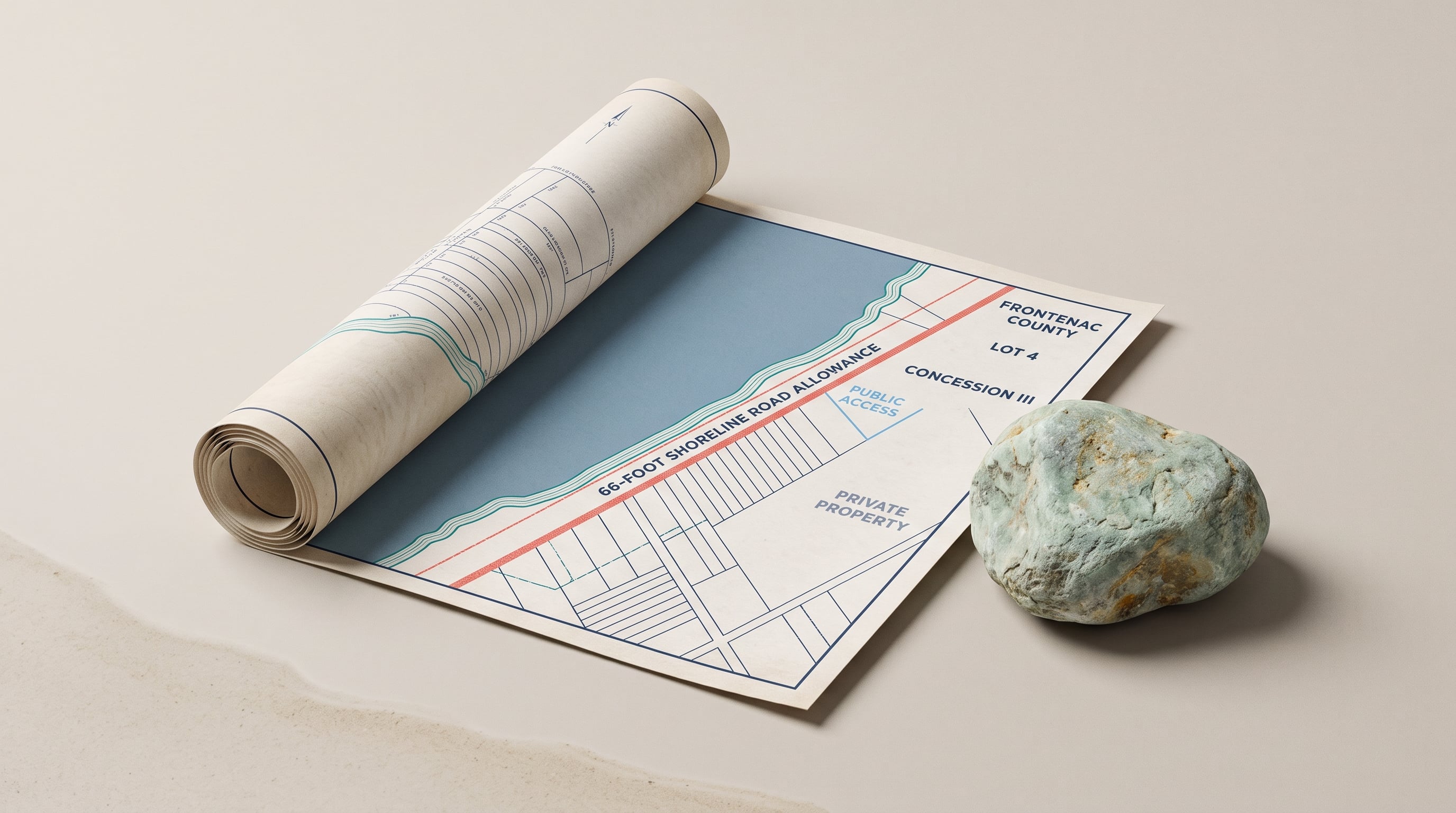
The short answer: First-time waterfront buyers in Eastern Ontario and Frontenac County most often overlook costs and risks beyond the purchase price itself: higher insurance premiums, dock and shoreline maintenance, septic and well upkeep, and whether a Shoreline Road Allowance (SRA) has actually been closed and purchased. Before making an offer, confirm the property's zoning setbacks, conservation authority permits, septic and well condition, and true year-round versus seasonal access.
The allure of waterfront living in Eastern Ontario and Frontenac County is undeniable. Waking up to the serene expanse of a lake, the gentle lapping of waves, or the quiet majesty of a river flowing past your doorstep is a vision that captivates many aspiring homeowners. However, the path to owning a slice of paradise by the water is often fraught with complexities that first-time waterfront buyers only fully appreciate after the keys are in hand. This post walks through the questions worth asking upfront, so a few practical details do not turn into regrets later.
The Allure of the Water: A Unique Lifestyle in Eastern Ontario
Eastern Ontario and Frontenac County boast an incredible diversity of waterfront experiences, from the tranquil shores of smaller inland lakes and the historic Rideau Canal system to the grand waters of Lake Ontario and the St. Lawrence River. Each body of water offers its own unique charm and set of considerations. For many, a waterfront property isn't just a home; it's a lifestyle change, offering opportunities for recreation, relaxation, and connection with nature. Imagine leisurely mornings on your dock, afternoons spent boating or kayaking, and evenings enjoying sunsets over the water. This dream, however, comes with its own distinct set of responsibilities and hidden factors that differ significantly from a traditional urban or even rural property purchase.
Understanding these nuances from the outset is paramount. A general home inspection, while crucial, often doesn't delve into the specific intricacies of shoreline integrity, water rights, or the environmental regulations governing waterfront parcels. Working with someone who understands the specific geological, environmental, and regulatory landscape of the region can help identify potential pitfalls before they become expensive surprises.
Key Questions First-Time Waterfront Buyers Often Miss
"What are the true costs beyond the purchase price?"
The initial sticker price of a waterfront home is just the beginning. Many first-time buyers are surprised by the additional, often substantial, expenses. Beyond property taxes and standard utilities, buyers encounter a range of specialized costs. Insurance, for instance, is often higher for waterfront properties due to flood risk and increased liability. See our guide on Waterfront Home Insurance in Eastern Ontario to understand the specifics. Maintenance can also be more intensive; docks require regular upkeep, seawalls might need repair, and landscaping often involves erosion control. Adding structures like boathouses or expanding a dock brings permit fees and construction costs.
Buyers should also budget for the upkeep of private services like septic systems and well water. These are critical components of rural waterfront living, and their maintenance can be significant: water testing, septic pump-outs, and potential repairs are ongoing expenses. Consider the cost of winterizing a cottage or closing it down for the season if it's not a year-round residence. Access to the property, especially in winter, might require private plowing if it's on an unassumed road. A comprehensive financial plan needs to extend far beyond the mortgage payment to truly account for the waterfront lifestyle.
"How does the shoreline protection and zoning impact me?"
This is perhaps one of the most critical and often overlooked areas. In Eastern Ontario and Frontenac County, waterways are protected by various municipal, provincial, and sometimes federal regulations. Eastern Ontario Conservation Authority permits are often required for any work near or on the shoreline, including docks, boat launches, or significant landscaping changes. Zoning bylaws dictate what can be built, where, and how close to the water's edge. Understanding setbacks from the high-water mark is crucial, as is knowing if the property has a Shoreline Road Allowance (SRA).
The SRA can be a hidden risk for waterfront buyers. It refers to a strip of land, usually 66 feet (20 meters) wide, along the edge of navigable waterways that belongs to the municipality or Crown. If this allowance hasn't been closed and purchased by the property owner, the buyer may not own the land right up to the water's edge, potentially impacting dock placement, privacy, and future development plans. Read more in Shoreline Road Allowance (SRA) in Eastern Ontario: The Hidden Risk Behind Waterfront Listings. Always make an offer conditional on a thorough review of these documents and approvals, and ideally, confirmation that the SRA is owned or being purchased by the seller.
"What about the water quality and access?"
The dream of swimming or boating from a backyard depends entirely on the specific water body and property. Not all waterfront is created equal. Ask about the water quality: is it safe for swimming? Are there seasonal algae blooms? Is the lake or river prone to excessive weeds? Consider the depth of the water at the shoreline and dock, especially for mooring a boat. Some areas can be very shallow, making boating difficult later in the season during droughts. Currents can also be a factor, especially on larger rivers or connecting channels.
Beyond the surface water, don't forget the drinking water. Most rural waterfront properties rely on well water, so it's imperative to have the well tested comprehensively. See What Does A Well Water Test Tell Rural Buyers In Eastern Ontario for what to look for, including tests for potability, flow rate, and overall water quality. A good flow rate is essential for daily use, especially with multiple bathrooms or an irrigation system.
"What are the challenges with septic and well systems on waterfront?"
Private septic systems and wells are standard for most rural waterfront properties in Eastern Ontario, but their proximity to water bodies adds layers of complexity and regulation. Septic systems are subject to stringent provincial environmental regulations due to their potential impact on water quality, and proper function and regular maintenance are legally required. A professional septic inspection should be part of due diligence, assessing the age, condition, and capacity of the system and confirming it meets current standards.
Regional note:Frontenac County and surrounding areas have a prevalence of limestone bedrock, which can pose unique challenges for septic installation and longevity. See Why Septic Systems Fail On Limestone Soil In Eastern Ontario for detail. A failing septic system near a lake or river is both an environmental hazard and a costly problem to fix, often requiring full replacement under stricter codes.
"What is the true privacy and community feel?"
The image of a secluded waterfront retreat is appealing, but reality can vary. Some waterfront properties offer genuine solitude, while others are part of vibrant, close-knit cottage communities. Some lakes are busier than others, especially on summer weekends, with increased boat traffic and recreational activity, which can significantly impact the "peace and quiet" a buyer might be seeking.
It is also worth asking about the prevalence of short-term rentals in the area. A high concentration of rental properties can change the character of a neighbourhood, bringing transient visitors and potentially affecting noise levels and privacy. Understanding the local demographic, whether primarily seasonal cottagers, year-round residents, or a mix, helps determine if the community aligns with a buyer's expectations.
"What are the implications of seasonal versus year-round use?"
Many waterfront properties in Eastern Ontario are seasonal cottages, while others are full-time residences, and the distinction carries real implications. A seasonal property might have limited road access in winter, less robust insulation, and plumbing that requires extensive winterization to prevent freezing. Access to services like garbage collection, internet, and emergency response can also differ between seasonal and year-round communities.
If a buyer intends to use a seasonal property year-round, they will need to assess the cost and feasibility of upgrading insulation, heating systems, water lines, and possibly road access. Conversely, for seasonal use, it is worth understanding the specific winterization procedures required to protect the property during colder months, including crawl spaces, water pumps, and exposed pipes.
"How does property maintenance differ for waterfront homes?"
Waterfront properties come with maintenance demands that extend beyond typical home care. Docks and boathouses are exposed to the elements and water, requiring regular inspection, cleaning, and sometimes repair or replacement. Seawalls or revetments need periodic assessment, and erosion control, whether natural plantings or engineered measures, is an ongoing consideration to preserve the shoreline.
The exterior of the home may require more frequent attention due to increased exposure to moisture, sun, and wind, and access for contractors or service providers can be more challenging in remote waterfront locations. A proactive maintenance schedule for waterfront features helps protect the investment over time.
"What are the resale considerations unique to waterfront properties?"
While waterfront properties generally hold their value well and remain in demand, their resale market can be more specialized. The pool of potential buyers is often narrower than for conventional homes, since specific requirements around water access, property size, and location come into play. Factors that might seem minor, such as a challenging boat launch or limited swimming depth, could be deal-breakers for certain buyers.
Changes in environmental regulations or zoning bylaws over time could also affect future development potential or the use of certain shoreline structures, which in turn affects resale value. Proximity to amenities, the quality of the specific water body, and the condition of docks, septic, and well systems are all significant factors for waterfront buyers evaluating a purchase.
These Are the Questions Buyers Wish They'd Asked Earlier
Waterfront due diligence goes far beyond the view. Shoreline ownership, septic systems, wells, zoning, Conservation Authority restrictions, insurance, road access and seasonal use can all change what you're really buying. Take the complete 25-point Eastern Ontario buyer checklist with you before making an offer.
Get the 25-Point Buyer GuideFrequently Asked Questions
Do I need special insurance for a waterfront property?
Standard home insurance often does not automatically include overland water or flood coverage. Waterfront buyers should get a written insurance quote for the specific address during the conditional period, confirming overland water and sewer backup coverage before removing conditions.
What is a Shoreline Road Allowance (SRA) and why does it matter?
An SRA is typically a 66-foot strip of land along a waterway that may still belong to the municipality or Crown rather than the property owner. If it has not been closed and purchased, it can affect dock placement, privacy, and development rights, so confirming its status is an essential part of due diligence.
Can I use a seasonal cottage year-round?
Sometimes, but it depends on insulation, plumbing, road access, and heating systems. Converting a seasonal property to year-round use can require meaningful upgrades, so it is worth having these assessed before purchase if year-round living is the plan.
How often do septic systems need to be inspected on waterfront properties?
Provincial regulations require septic systems near water bodies to function properly at all times, and a professional inspection is recommended as part of the purchase process, plus regular maintenance afterward, particularly in areas with limestone bedrock common to Frontenac County.
Whether you're selling a cherished waterfront retreat or looking to find your perfect spot by the water, Deb Driscoll, Jaime Peca, and Luke Geleynse are here to help. Reach out today to start a conversation about your real estate goals in Eastern Ontario and Frontenac County.
Check out this article next