


Farm & rural properties are a niche segment of the market across our service communities, and they behave nothing like residential housing in town. Land use, acreage, zoning and long-term value positioning all come into play, and each one rewards a buyer or seller who understands the rural market on its own terms. This is the work we do every day across North Grenville and the surrounding region.
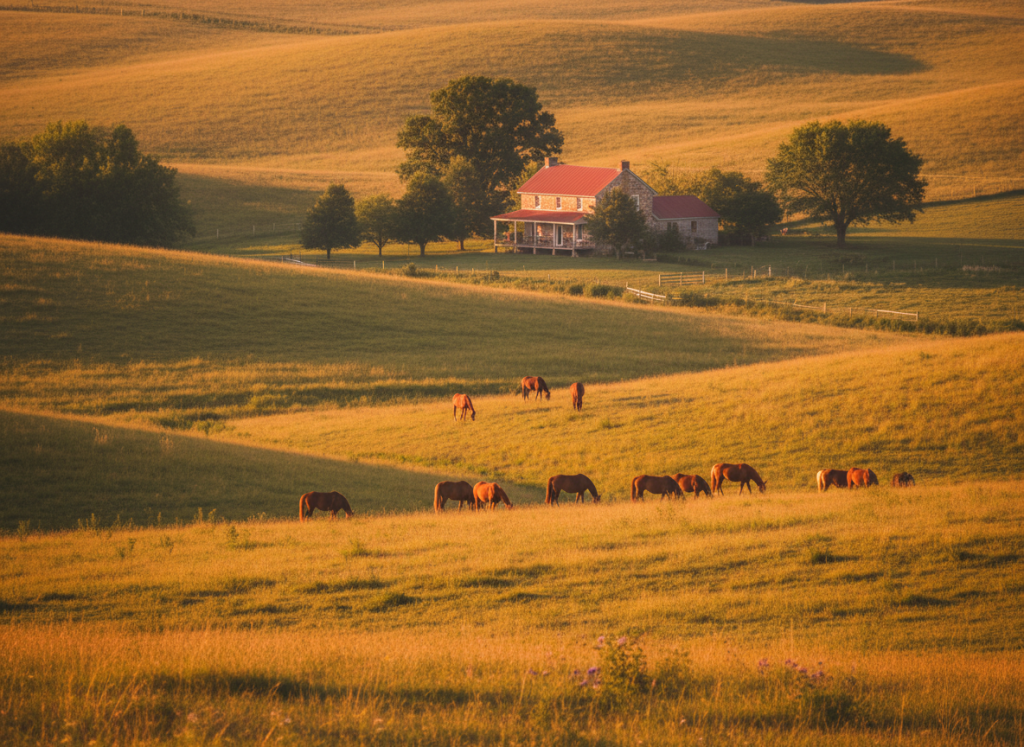
Farm & Rural Real Estate, Done Right
Within our rural service communities, this segment represents a more distinct and lower-volume market than the detached resale segment in town. We help clients navigate both the opportunities and the responsibilities that come with owning rural property: reading the land, understanding the systems that run it, and positioning a sale or purchase against current market conditions. Because the segment is small, local knowledge counts for more here than it does in a larger market, and that is precisely where the right guidance changes the outcome.
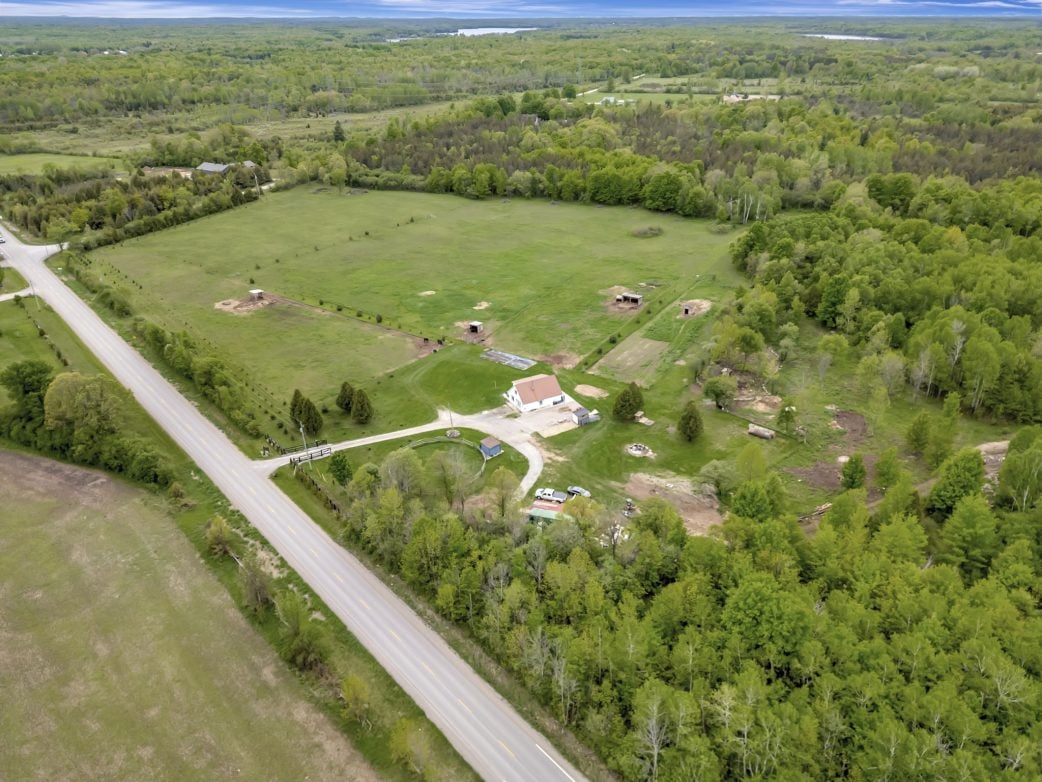
What to Consider When Buying Farm or Rural Property
Buying rural land involves factors that simply do not exist in a suburban purchase, and understanding them early is what separates a confident decision from an expensive surprise. The essentials to evaluate include:
- Acreage size and the land use it actually permits
- Zoning, severance potential and agricultural regulations
- Water sources, septic systems and soil conditions
- Access roads and seasonal maintenance
- Long-term value and resale potential
None of these appear on a listing sheet, but every one of them can be confirmed before you commit. A buyer who works through this list early carries far less risk than one guessing at the same questions after closing, which is exactly why preparation is the rural buyer's greatest advantage.
The House Is Only Part of What You're Buying
Acreage alone doesn't tell you what a rural property can actually support. Wells, septic systems, zoning, road access, soil conditions, insurance and land-use restrictions can all affect what the property costs, how you can use it and what you may be able to do with it later. Know what to verify before you make an offer.
Get the 25-Point Buyer Guide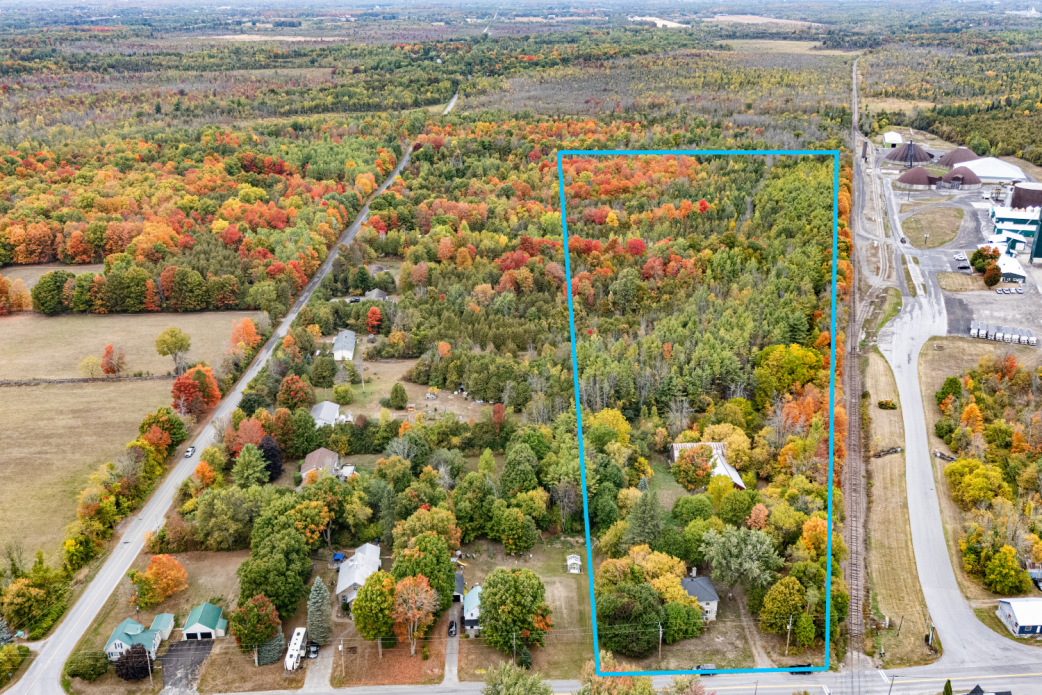
Selling a Farm or Rural Property
Selling rural property well depends on clear positioning and a real understanding of buyer intent. Rural buyers are looking for specific things: land usability, location, water and septic systems that check out, and long-term lifestyle potential. We help sellers present these properties accurately and strategically, so that the features that matter are front and centre and the pricing reflects current market conditions rather than guesswork. A rural property presented with that kind of precision reaches the buyer who values it most, which is how rural sellers protect their return.
What the Farm & Rural Market Looks Like Right Now
Rural & farm property in North Grenville moves on its own clock. Over the twelve months ending June 11, 2026, fourteen farm, rural residence and vacant land properties sold across the municipality, a deliberately small and niche pool. The median sold price across that group was $252,500, but the range tells the real story: sales ran from $95,000 for modest vacant parcels to $1,200,000 for established acreage, with an average sold price of $385,771.
Two numbers there matter more than the headline price. The sale-to-list ratio, at a median of 91 percent, shows that rural sellers are accepting real movement off the asking price, which means a prepared buyer still has room to negotiate. And acreage itself does the heavy lifting on value: narrow the search to lots under two acres and the median falls to roughly $160,000, but open it to full acreage and the median climbs to $252,500 while the ceiling more than doubles. That spread is the single most important thing a generalist tends to misread, and the thing someone who knows the rural market reads correctly.
These figures are verified, not estimated. They come from a direct MLS search of sold farm, rural residence and vacant land properties in the Municipality of North Grenville for the twelve months ending June 11, 2026.
Source: MLS Matrix, Driscoll-Peca Real Estate Team, as of June 11, 2026. Fourteen transactions, a low-volume specialized segment; figures describe a niche rather than a broad price index.
A small market is not a weak one. It is a market where a handful of comparable sales has to be read with genuine local knowledge rather than pulled from a dashboard, and that is the whole reason buyers and sellers who take rural North Grenville seriously tend to do better here than they would in a larger, noisier market.
The Due Diligence That Defines a Rural Purchase
The purchase price of a rural property is the beginning of the math, not the end of it. Three systems a suburban buyer never thinks about, the well, the septic, and the conservation authority that governs the land, decide both what a property costs to own and what it is allowed to become.
Wells and Septic Systems
A rural home makes its own water and treats its own waste, and both carry inspection and approval costs that are documented and current. The Rideau Valley Conservation Authority, which administers septic approvals across much of North Grenville, sets a 2026 fee of $990 for a Class 4 leaching bed permit and $230 for a septic inspection, with smaller Class 2 and Class 3 systems at $480. These are permit costs alone, separate from building or replacing the system, where a failed leaching bed is the five-figure repair a casual walk-through will never reveal.
Verified 2026 RVCA septic fees: Class 4 leaching bed permit $990 · septic inspection $230 · Class 2 and 3 systems $480 · required maintenance contract registration $155.
Source: Rideau Valley Conservation Authority, 2026 Fee Schedule (Schedule E). Confirm the effective date on the current RVCA schedule before relying on these figures in negotiation.
The point is not that rural ownership is expensive. It is that rural ownership is knowable. Every one of these numbers can be confirmed before you commit, which means a well-prepared buyer in North Grenville carries far less risk than someone guessing at the same costs in an unfamiliar market.
The Conservation Authority Layer
If any part of a property sits near water, wetland, steep slope or floodplain, the conservation authority becomes a second permitting office with its own schedule. RVCA 2026 fees run from $290 for a dock or small fill placement to $670 for a new home outside the floodplain hazard and $2,110 for new construction within a slope or floodplain hazard. The neighbouring Mississippi Valley Conservation Authority sets a parallel 2026 schedule, including $1,110 for a new residential dwelling over 100 square metres. These are governed under Ontario Regulation 41/24, which remains in force in 2026 with no amendments recorded on the provincial register.
For the full breakdown of carrying costs, heating, hydro and the true cost of distance, our companion guide goes system by system: The Real Cost of Owning Rural Property in Eastern Ontario. Read alongside this page, it gives a buyer the complete cost picture before a single showing is booked, which is the kind of preparation that turns a rural purchase from a gamble into a sound decision.
What Decides Whether Rural Land Is a Good Investment
Two parcels that look identical from the road can carry completely different futures, because the value of rural land is set less by what you see and more by what the regulations allow. Four technical factors do most of the work, and each can either protect or quietly erode long-term value.
- Septic capacity and the secondary dwelling ceiling. Whether a lot can support an additional residential unit depends on its septic design load, and that ceiling determines whether the land can ever generate rental income.
- Conservation setbacks and the unbuildable lot. A parcel that looks buildable on paper can be effectively frozen once wetland buffers and floodplain hazard zones are mapped under O. Reg. 41/24.
- Agricultural zoning and the MDS freeze. Rural and agricultural zoning are not interchangeable, and Minimum Distance Separation rules can limit development if a neighbouring farm expands livestock operations.
- Private road access and mortgage eligibility. A property on an unmaintained private road without a registered maintenance agreement can complicate financing and resale, regardless of how appealing the home itself is.
Each of these is the difference between land that compounds in value and land that traps it. We unpack all four in depth, with the regulatory framework behind each, in Is Rural Land Near Ottawa a Good Investment?. A buyer who answers those four questions before making an offer is the one who ends up with land that earns its keep, which is the whole reason to choose rural in the first place.
Why North Grenville Is the Right Place to Own Rural Land
A rural property is only as strong as the municipality around it, and North Grenville is investing in itself in ways that directly support long-term land value. The Bell Hall project on the Kemptville Campus is converting a heritage building into 60 affordable residential units for seniors and veterans, backed by more than $24 million in federal Affordable Housing Fund support within a total project value of just under $29 million, with construction underway and occupancy anticipated in fall 2027.
The municipality is also putting money directly into its core through the 2026 Downtown Kemptville Community Improvement Plan, whose intake opened in April 2026. The program covers half the cost of eligible facade and signage work up to $10,000, offers $5,000 per new residential unit, and provides a tax-increment-equivalent grant that starts at 90 percent. Alongside an active slate of rezoning and development applications through spring 2026, this shows a municipality managing growth deliberately rather than letting it happen by accident.
Verified North Grenville development context, 2026: Bell Hall, 60 affordable units, occupancy targeted fall 2027 · Downtown Kemptville CIP intake opened April 2026 · multiple active rezoning applications through spring 2026.
Sources: Municipality of North Grenville (Bell Hall project page; Downtown Kemptville CIP release; planning notices), compiled June 2026.
For a rural buyer, this matters more than any single listing. Deliberate municipal investment is what keeps a community desirable across the decades you intend to own there, and it is the quiet reason rural North Grenville holds its value while protecting the open space and slower pace that drew you to it.
See Current Rural and Acreage Listings
Browse the full range of farm, acreage and rural properties available across our service communities.
View Rural and Acreage ListingsFrequently Asked Questions
What is the most important inspection for a rural property in North Grenville?
The well and septic inspection. A well inspection should include recovery-rate testing alongside standard water-quality analysis, and a septic assessment should evaluate tank age, material and leaching-bed condition. These systems are the most expensive to repair and directly affect both daily livability and resale value, which is why they are the one inspection a rural buyer should never skip.
How much does a septic permit cost in the Rideau Valley area in 2026?
The Rideau Valley Conservation Authority's 2026 schedule sets a Class 4 leaching bed permit at $990, a septic inspection at $230, and smaller Class 2 and Class 3 systems at $480. These are permit fees only, separate from the cost of building or replacing the system. Confirm the current schedule with the RVCA before relying on these figures in an offer.
Do I need a conservation authority permit to build on rural land near water?
Often, yes. If a property sits near water, wetland, steep slope or floodplain, work is governed under Ontario Regulation 41/24 and requires a permit from the local conservation authority. RVCA 2026 fees range from $290 for minor work to $2,110 for new construction within a hazard zone, and the Mississippi Valley Conservation Authority sets a parallel schedule. Confirming this early protects both your budget and your build plans.
Why is the median rural sale price lower than I expected?
Because the rural segment includes everything from small vacant parcels to full acreage estates. Across the twelve months ending June 11, 2026, the median sold price for farm, rural residence and vacant land in North Grenville was $252,500, with sales ranging up to $1,200,000. The median reflects a small, varied pool of fourteen sales, so individual properties, especially those with significant acreage, regularly sell well above it.
Is rural land in North Grenville a good long-term investment?
It can be, and the outcome depends on four technical factors most buyers overlook: septic capacity for any secondary dwelling, conservation setbacks, agricultural zoning, and private road access. Land within commuter distance of major employment remains finite, and North Grenville's deliberate municipal investment supports long-term demand. Working through those factors before you buy is what turns rural land into an asset that holds and grows its value.
Thinking About Rural or Farm Property?
Rural buying rewards preparation. Let us help you read the land, the systems and the numbers before you make an offer.
Get Rural Property AdviceGet Rural Property Advice
Driscoll Peca Realty
Address
8 Clothier Street est
Kemptville
ON
K0G 1J0
Email Us
[email protected]
Call Us
(613) 706-5056