The short answer: Building a new home in Eastern Ontario's rural settings, such as around Kemptville or in Frontenac County, offers a unique opportunity for custom living but requires careful planning. Understanding land characteristics, infrastructure needs like wells and septic systems, local zoning regulations, and the nuances of rural community life is crucial for a successful and satisfying new build experience.
Eastern Ontario's landscape, with its rolling fields, pristine lakes, and charming small towns, presents an appealing vision for many dreaming of a rural new build. From the vibrant community of Kemptville to the serene expanses of Frontenac County and areas like Rideau Lakes, the region offers diverse opportunities. However, embarking on a new construction project in a rural setting is distinctly different from building in an urban or suburban environment. It involves more than just selecting floor plans and finishes; it means embracing a lifestyle shaped by nature, community, and self-sufficiency.
While the allure of peace and privacy is strong, understanding the practicalities and challenges specific to rural construction is vital. This journey involves unique considerations for site selection, infrastructure development, navigating local regulations, and budgeting for aspects that might not be present in a city build. For a broader overview of considerations when buying rural property in Eastern Ontario, you might find our general guide, What Should Investors Know Before Buying Acreage in Eastern Ontario?, particularly helpful as a starting point.
The Rural Dream, Reimagined
A new build in rural Eastern Ontario is an opportunity to craft a home that truly reflects your vision and integrates with its natural surroundings. Imagine waking up to the sounds of birds, enjoying vast starry nights, and having ample space for hobbies, gardens, or simply quiet contemplation. This lifestyle often fosters a deeper connection with the environment and a strong sense of community with neighbours who share similar values.
However, true rural living also means a greater reliance on self-sustained systems and an understanding of the local environment. It's about preparedness, whether for a power outage or managing your own well and septic system. It's a commitment to a different rhythm of life, one that many find incredibly rewarding.
Site Selection for Your Rural New Build
Choosing the right parcel of land is arguably the most critical step in a rural new build. Unlike urban lots with pre-existing services, rural land requires a thorough investigation of its unique characteristics. Beyond aesthetics, consider practical aspects:
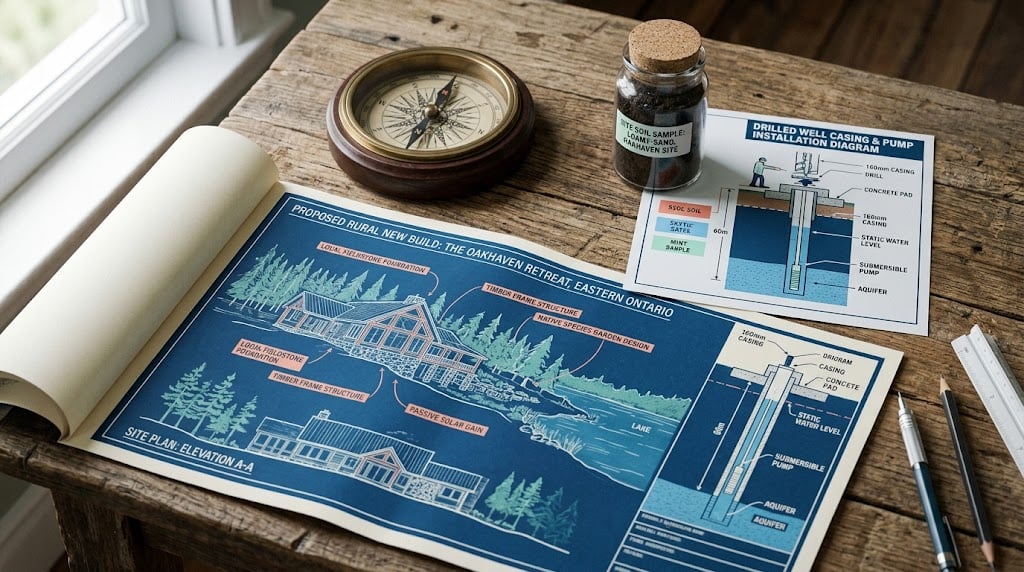
- Topography and Soil Conditions: Site slope, drainage, and soil composition affect both foundation costs and septic design. For a deeper look at what these conditions can reveal, see our guide to hidden aspects of rural properties in Eastern Ontario.
- Water Source: Every new build needs a reliable well. For what a proper test actually tells you, see what a well water test tells rural buyers in Eastern Ontario.
- Septic System: Every rural property requires a septic system. The size, type, and placement depend on soil permeability, lot size, and the number of bedrooms in your planned home. Obtain a septic system design and permit before construction begins.
- Access and Driveway: Consider the cost and feasibility of building a driveway, especially if the lot is far from a paved road. Permits from the municipality or conservation authority may be required.
- Sunlight and Orientation: Maximizing natural light and passive solar gain can significantly impact your home's energy efficiency and comfort.
- Proximity to Amenities: While embracing rural life, consider your needs for schools, grocery stores, medical services, and local communities like Merrickville or Perth.
Regional Note: Environmental Protections
Eastern Ontario is home to sensitive ecosystems. When selecting land, be aware of conservation authority regulations, wetlands, and other protected areas that might impact building potential or require specific mitigation measures. Always consult with local planning departments and relevant authorities early in your process.
Essential Rural Infrastructure: Beyond the Grid
For a new build, you are effectively creating your own infrastructure, which means careful planning for services:
- Electricity: While most rural areas have hydro access, connecting to the grid can involve significant costs depending on the distance from existing power lines. Investigate these costs early.
- Internet and Communication: High-speed internet is increasingly available in rural Eastern Ontario, but coverage can still be spotty in some remote areas. Research available providers and technologies (fibre, satellite, fixed wireless) for your specific location.
- Heating and Cooling: Consider options like propane, wood, geothermal, or high-efficiency electric heat pumps. Rural living often allows for more diverse and sustainable heating solutions.
- Waste Management: Rural properties typically rely on local waste collection services or require residents to transport waste to transfer stations. Confirm the services available in your chosen township.
Navigating Regulations and Permits
Building in Eastern Ontario involves a series of permits and adherence to municipal and provincial regulations. This can be complex and time-consuming, but essential for a safe and legal build.
- Zoning Bylaws: Each municipality (e.g., North Grenville, Augusta, Rideau Lakes) has zoning bylaws that dictate what can be built on a property, including setbacks, building height, and lot coverage.
- Building Permits: Required for most new construction, these ensure your home meets the Ontario Building Code for structural integrity, safety, and energy efficiency.
- Septic Permits: Obtained from the local health unit or conservation authority, this permit approves your septic system design and installation.
- Entrance Permits: For new driveways connecting to a municipal road.
- Conservation Authority Permits: Properties near water bodies or wetlands often need additional sign-off. See our guide to navigating Eastern Ontario conservation authority permits for what's typically involved.
Engaging with your local municipal planning department early in the process is highly recommended. They can provide guidance on specific requirements for your chosen property.
The Construction Process: Local Expertise Matters
Selecting the right builder for your rural new build is paramount. A builder with experience in Eastern Ontario's rural landscapes will understand local challenges, regulations, and reliable subcontractors.
- Local Builders: They often have established relationships with local suppliers and tradespeople, which can streamline the process. They are also familiar with specific regional considerations like bedrock or soil types.
- Project Management: Rural builds can involve more coordination due to site isolation. A builder capable of robust project management is essential.
- Contingency Planning: Unforeseen challenges are more common in rural builds, from weather delays to unexpected site conditions. A contingency fund is a wise part of your budget.
Financing Your Rural New Build
Financing for a rural new build differs from purchasing an existing home. You'll typically need a construction mortgage, which is disbursed in stages as construction progresses.
- Construction Mortgage: Funds are released at key milestones (e.g., foundation, framing, lock-up, completion). This requires appraisals at each stage.
- Land Financing: You may need to secure separate financing for the land purchase before obtaining a construction mortgage.
- Appraisal Challenges: Rural properties can be harder to appraise due to fewer comparable sales, especially for unique custom builds.
Living the Rural Lifestyle: Beyond the Build
Once your new rural home is complete, the true experience of Eastern Ontario living begins. This includes adapting to new routines and responsibilities:
- Maintenance: Wells, septic systems, and driveways are now your responsibility to maintain. Our guide to the real cost of owning rural property in Eastern Ontario covers what this tends to cost.
- Transportation: Relying on a vehicle for most errands is typical. Consider winter road conditions and access to snow removal services.
- Community Involvement: Rural communities, while often spread out, can be very close-knit. Participation in local events, farmers' markets, or volunteer groups can enrich your experience.
- Embracing Nature: Be prepared for wildlife encounters, seasonal changes impacting your property, and the serene beauty of the natural world at your doorstep.
Tip: Seasonal Readiness
Rural living in Eastern Ontario means experiencing all four seasons fully. Plan for reliable snow removal in winter, manage potential spring thaw drainage, and embrace the vibrant summers and picturesque autumns. Being prepared for seasonal shifts ensures year-round comfort and enjoyment.
Featured In-House Listings


Frequently Asked Questions
What are common challenges with rural new builds in Eastern Ontario?
Common challenges include managing infrastructure like wells and septic systems, dealing with diverse soil conditions (such as limestone), securing reliable internet, coordinating with local trades, and navigating complex municipal and conservation authority permits. Unexpected costs related to site preparation or utility connections can also arise.
How long does a rural new build typically take from start to finish?
The timeline for a rural new build can vary significantly based on factors like land preparation, permit approvals, builder availability, and the complexity of the home design. Generally, from the time you secure your land to moving into your completed home, the process can take anywhere from 12 to 24 months, sometimes longer. Permit acquisition alone can take several months.
What permits are needed for a rural new build in Eastern Ontario?
You will typically need a building permit, a septic permit (from the local health unit or conservation authority), and an entrance permit for your driveway. If your property is near water or wetlands, you may also require additional permits from the relevant conservation authority. Always check with your specific municipal planning department for a comprehensive list applicable to your location.
Navigating the journey of a rural new build in Eastern Ontario requires local insight and careful planning. The Driscoll-Peca Real Estate Team at REAL Brokerage, including Deb Driscoll, Jaime Peca, and Luke Geleynse, can help guide you through the intricacies of finding suitable land and understanding the local building landscape. For assistance with your rural real estate aspirations, please reach out to the team.
Check out this article next