


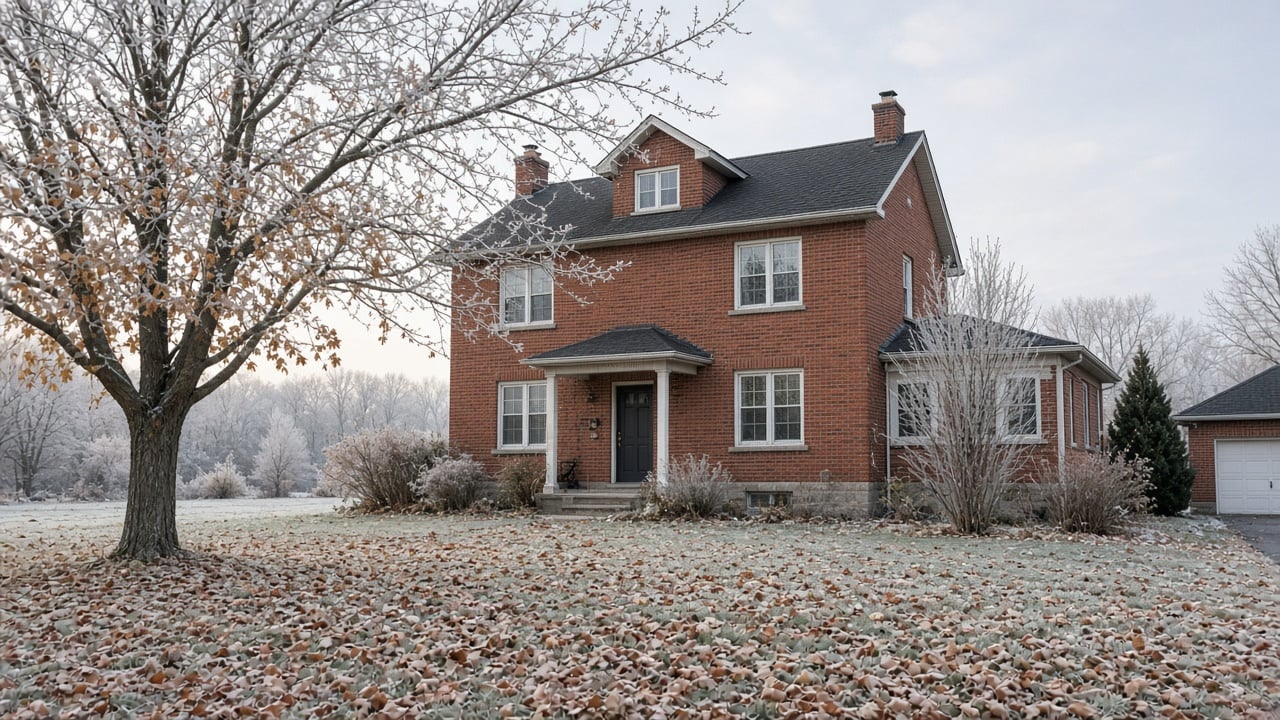
Short answer: if you’re selling a vacant home this winter, keep the heat on, keep someone checking it, and talk to your insurer before anything else. Fully draining the plumbing is an option, but it changes how the house shows and what a buyer can test.
We get this question a lot from estate sellers, people who already moved for work, and owners who bought before they sold. Here’s how we think about it in North Grenville and the rest of Eastern Ontario.
Thinking about what your next place looks like? Browse the homes we have for sale right now.


Why a vacant home is a different problem in winter
An occupied house gets noticed. Someone hears the furnace quit, sees a drip, or smells something off.
An empty house can sit with a problem for days. In January, that’s long enough for a frozen supply line to split and soak a finished basement.
That’s why we treat vacancy as its own project, not just “the owners are gone.”
Start with your insurance policy
Call your insurer or broker the moment you know the house will be empty. Many home policies have vacancy or unoccupancy wording, and some require regular checks or proof the heat stayed on.
Ask them three plain questions:
- How long can the home sit empty before coverage changes?
- How often does someone need to check it, and does it need to be logged?
- Do they want the water shut off or the plumbing drained?
Get the answers in writing. We’d rather a seller hear “you need a vacancy permit” in November than after a claim in February.
Heat on or drained: our opinion
For most homes we’re listing, we prefer heat on and water managed over a full drain down.
Option 1: keep it heated and monitored
This is what we recommend for homes that will be actively shown.
- Set the thermostat to a steady temperature your insurer is comfortable with. Don’t drop it to the bare minimum.
- Leave interior doors and lower cabinet doors under sinks open so warm air reaches the pipes on outside walls.
- Shut the main water valve between visits if your insurer agrees, and reopen it before showings so taps and toilets work.
- Add a low cost Wi Fi thermostat or temperature alert so you hear about a furnace failure the same day.
- Book a furnace service before the cold settles in. An empty house is a bad place for a surprise breakdown.
Option 2: full winterization
Sometimes draining the house makes sense. An estate that won’t list until spring, a cottage style property, or a house with no reliable heat source are common examples.
If you go this way, hire a licensed plumber. They’ll drain supply lines, the water heater and fixtures, and put plumbing antifreeze in traps.
The tradeoff is real. Buyers can’t run taps, flush toilets or test the water heater, and a home inspector will note it. On a rural property, the buyer also can’t easily do a well flow test or water sample until it’s recommissioned.
Rural homes need a few extra checks
On wells and septic, vacancy adds a couple of risks most town homes don’t have.
- Pump house or well pit: make sure heat tape or a small heater is working and the cover seals.
- Pressure tank and lines in an unheated crawlspace: these freeze first.
- Septic: a system that gets almost no use over winter is usually fine, but tell your septic contractor the house is empty if a pump out is planned.
- Driveway and lane: arrange snow clearing before the first big storm so showings and emergency access aren’t blocked.
Buyers looking at rural homes in the winter will ask about water. If you’re planning to drain, read what buyers expect from a well water test so the timing doesn’t stall a deal.
Make it feel lived in for showings
A cold, dark, empty house shows badly. Buyers feel the chill before they see the rooms.
- Put a few lamps on timers so the house is lit at dusk.
- Bring the heat up a few degrees on showing days.
- Keep a mat and boot tray at the door, plus a sign asking people to remove boots.
- Leave a short note on the counter listing the furnace age, water treatment, and any recent work.
- Keep walkways shovelled and salted. A slip on the front step is the last thing anyone needs.
Who should be checking the house
Pick one person and give them a simple routine. A neighbour, a family member, or a property check service all work.
- Walk every floor, including the basement and attic hatch.
- Look under sinks and around the water heater.
- Check the thermostat reading and the furnace is running.
- Flush a toilet and run a tap if the water is on.
- Note the date and time. Insurers like a log.
If you’re out of town, we can help coordinate this with you as part of how we list and sell homes. We won’t replace your property check person, but we’re in and out of homes all winter and we’ll tell you if something looks wrong.
What we tell sellers who aren’t sure
If the house will be shown this winter, keep it heated and checked. If it won’t be shown until spring, talk to your insurer and a plumber about draining it.
And don’t let the house go quiet. A vacant home that’s warm, lit and tidy competes far better than one that feels shut down. You can learn more about the team on our homepage.
FAQ
Do I have to tell my insurance company my house is vacant?
Yes, in almost every case. Many home policies change or limit coverage once a house is unoccupied for a set period, so call your insurer or broker before you move out and get their conditions in writing.
What temperature should I keep an empty house at in winter?
Follow what your insurer asks for first. As a rule, we prefer a steady, moderate setting over the lowest possible number, because cold corners near outside walls are where pipes freeze.
Should I shut off the water in a vacant house?
Shutting the main valve between visits reduces the damage if a pipe fails. Turn it back on before showings so buyers can run taps and flush toilets.
Is it better to drain the plumbing or keep the heat on?
For a home that’s actively being shown, we usually prefer heat on with the water managed. A full drain down suits homes that won’t be shown until spring or that have no dependable heat.
Who should winterize the plumbing?
Use a licensed plumber. Draining supply lines and the water heater and adding antifreeze to traps is easy to get wrong, and a missed low spot can still freeze.
Can buyers do a home inspection on a winterized house?
They can, but the inspector can’t test plumbing, fixtures or the water heater while the system is drained. Expect a note in the report and possibly a request to recommission before closing.
How does winterizing affect a rural property with a well?
A drained system means the buyer can’t easily test water flow or take a water sample. Plan when the system will be turned back on so the buyer’s conditions can still be met.
How often should someone check an empty house in winter?
Ask your insurer, since some policies set the schedule. Whatever the rule, a quick walkthrough with a written log is the habit we recommend.
Will a vacant home sell for less?
Not because it’s empty. It sells for less when it feels cold, dark or neglected, so lighting, heat on showing days and clear walkways matter more than furniture.
Can a smart thermostat replace in person checks?
No. A temperature alert is a great early warning, but it won’t see a slow leak under a sink or a roof drip. Use both.