The short answer: The first ninety days after moving from Ottawa to rural Eastern Ontario have their own rhythm: government and legal deadlines in the first two weeks, orientation to your new home's systems and services in the first month, and settling into the community and schools by the end of the third month. None of it is complicated, but doing it in order, rather than all at once or too late, is what turns a big life change into a smooth one.
Every household that moves from Ottawa to Kemptville, North Grenville, or the surrounding countryside goes through roughly the same first few months, even if the details differ. There are deadlines to meet, systems to learn, and a community to settle into. This guide lays out that first quarter week by week, so you know what actually needs your attention and when, rather than discovering it piecemeal.
For the emotional and lifestyle side of this transition, our articles on daily life after moving to Kemptville and why families are choosing Kemptville cover that ground well. This piece is the practical companion: the checklist itself.
What needs to happen in the first two weeks?
The first two weeks are dominated by legal and administrative deadlines that carry real consequences if missed. In Ontario, you are required to update your driver's licence and vehicle permit address within about a week of moving, which can often be done online through ServiceOntario. Your health card address has a longer window, thirty days, but because of privacy protections it must be updated in person at a ServiceOntario centre rather than online, so plan a visit to the nearest location early rather than leaving it to the deadline.
Alongside government identification, this is the window to notify your bank, insurance providers, employer, and any subscriptions or memberships of your new address, ideally started before the move rather than after. If you have not already arranged home insurance specific to your rural property, well and septic coverage, any acreage or waterfront considerations, confirm it is in place from day one rather than assuming your old policy simply transfers.
Week one and two priorities: driver's licence and vehicle address updated, health card appointment booked at your local ServiceOntario centre, rural home insurance confirmed active, and banks, employer, and key subscriptions notified of your new address.
Clearing these administrative essentials early frees up the rest of your first months for the more enjoyable work of actually settling into your new home and community.
How do you get oriented to your property's systems in the first month?
If you have moved from a serviced Ottawa home to a property with a private well and septic system, your first month is the time to learn how they work, not to wait until something goes wrong. Locate your well cap and understand roughly how your water system is set up, and if you have not already had the well tested for both quality and yield, arrange that early, since our guides to well water testing and well yield and water quantity cover exactly what to check.
Do the same for your septic system: locate the tank and field, note when it was last pumped if that information came with your closing documents, and set a reminder for the next scheduled service. If your property relies on propane, oil, or wood heat rather than natural gas, confirm your fuel supplier or delivery arrangement is set up before you need it, particularly heading into a colder season.
Do not wait for a problem to learn your property's systems. In your first month, walk the well, the septic, the heating setup, and the electrical panel with someone who understands them, whether that is your realtor, a trusted contractor, or the seller during a walkthrough, so you know the basics before you need them.
This orientation period is what turns rural systems from a source of anxiety into simply how your home works, and most new rural owners find this part of the transition far easier than they expected once they have walked through it once.



What should you confirm about services in your first month?
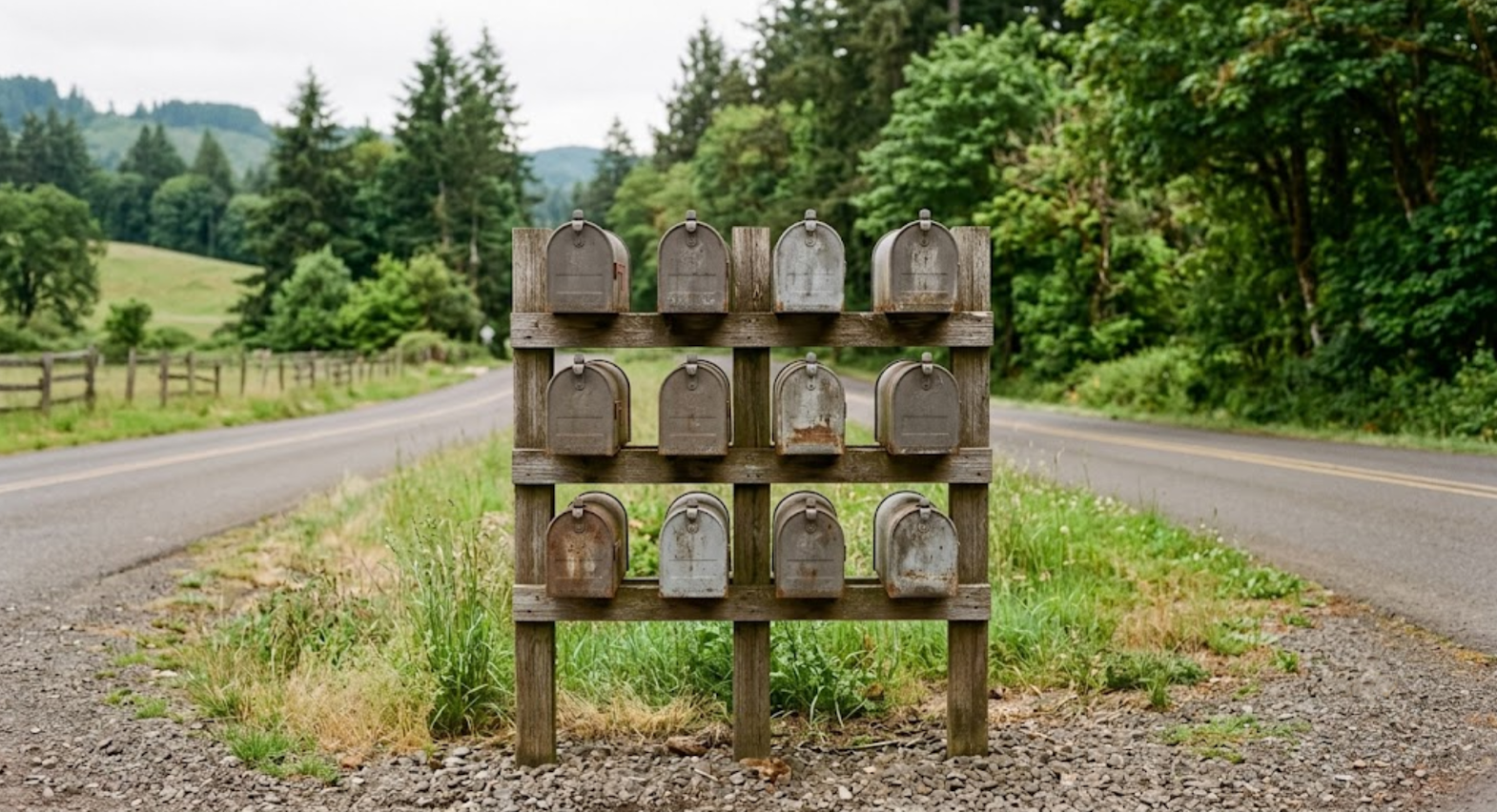
Beyond your property's own systems, your first month is the time to confirm how the everyday services around you actually function. Find out whether your road has any garbage or recycling collection or whether waste handling runs through a municipal transfer station, and locate that site along with its hours and any bag tag or fee requirements. Confirm where your community mailbox is and how mail delivery to your specific address works.
Test your internet connection under real conditions, working from home, video calls, whatever your household actually needs, rather than assuming the previous owner's setup matches your needs. If you have not already, confirm cell coverage at the property itself, since it can vary meaningfully even a short distance apart in rural terrain.
First-month services checklist: garbage and recycling arrangement confirmed, community mailbox located, internet tested under real use, cell coverage checked, and a plan in place for winter driveway and road access before the first snow arrives.
Once these pieces are confirmed, the daily rhythm of rural life stops requiring active thought and simply becomes how your household runs, which is exactly the ease that draws people to this kind of move in the first place.
How do you handle school registration if you are moving with children?
If your move includes children, particularly a move that happens mid-school-year, school registration deserves early attention rather than being left until move-in week. Contact your new school board as soon as your closing date is reasonably firm, since registration timelines and required documentation can take longer to process than families expect, and starting early gives your children the smoothest possible transition into a new classroom.
Beyond the paperwork, consider the adjustment itself. Moving schools mid-year is a real change for children, and our articles on raising kids in Kemptville and whether Kemptville is a good place for families speak to what that experience tends to look like once families have settled in.
Start the school conversation the moment your closing date is firm, not the week you move. Rural school boards can accommodate transfers well, but earlier contact means fewer gaps and a smoother first week for your children.
Families who plan this transition with a little lead time consistently find their children settle into rural schools and new friendships faster than they expected, which is one of the quieter rewards of a well-planned move.
What should you expect to feel during the second month?
The second month is often when the initial excitement of the move settles into the real texture of daily life, and for many households, this is when small adjustments surface: a different grocery routine, a longer or different commute pattern, or simply the quiet of a rural evening feeling unfamiliar at first. This is a normal part of any significant life change, not a sign that the move was the wrong choice.
This is also a good period to start exploring your surroundings deliberately rather than only running errands. Visit the local shops, introduce yourself to neighbours, and look into community groups, clubs, or events, since rural communities in this region tend to be genuinely welcoming to new arrivals who make a small effort to participate. Our piece on why Ottawa buyers are choosing Kemptville touches on this community dimension in more depth.
Second-month focus: give the adjustment period its due without judging it too quickly, explore local shops and community groups deliberately, and treat any lingering unfamiliarity as normal rather than a signal that something is wrong.
Most households find that by the end of the second month, the rhythm of rural life has started to feel less like an adjustment and more like simply how things are, which is exactly the shift a good relocation should produce.
What marks the end of a successful first 90 days?
By the third month, the administrative work should be fully behind you, licence, health card, insurance, and school registration all settled, and your property's systems, well, septic, heating, internet, should feel familiar rather than mysterious. Ideally, you have found your rhythm with local services, waste, mail, and winter access, and you have started to build the small social connections, neighbours, community groups, local shops, that turn a house into a home.
If any piece of this checklist still feels unresolved by the ninety day mark, that is worth addressing directly rather than letting it linger. A well or septic question that has not been fully understood, a school transition that has not gone smoothly, or a service gap that keeps causing friction are all solvable, and solving them early prevents small frustrations from becoming lasting ones.
Ninety-day markers of a settled move: all administrative deadlines met, property systems understood and functioning smoothly, local services confirmed and routine, school transition stabilized if applicable, and early community connections started.
Households who reach this point consistently describe their move from Ottawa to rural Eastern Ontario as one of the better decisions they have made, and a well-paced first ninety days is a large part of why that feeling holds.
What if something does not go smoothly?
Not every piece of a move goes exactly to plan, and that is normal rather than a sign of a bad decision. A well that needs an unexpected repair, a school adjustment that takes longer than hoped, or a service gap that takes a few calls to sort out are all common and solvable. What matters is addressing them directly rather than letting frustration build quietly.
Lean on the professionals who know the area: your real estate team, local contractors, the municipality, and neighbours who have been through the same transition themselves. Rural Eastern Ontario communities tend to be practical and helpful places, and most first-quarter hiccups resolve quickly once you ask the right person the right question.
A move that includes a few bumps in the first ninety days, resolved calmly, is still a successful move, and it is far more common than the version where everything goes perfectly from day one.
Frequently asked questions
What are the most urgent things to do after moving to Ontario?
Update your driver's licence and vehicle permit address within about a week, which can often be done online, and update your health card address within thirty days, which requires an in-person visit to a ServiceOntario centre. Confirm your home insurance is active from day one.
How do I learn my new home's well and septic systems?
Walk the property with your realtor, a contractor, or the seller during a walkthrough to locate the well and septic components, confirm recent testing and service records, and arrange a well test if one has not been done recently. Treat this as first-month priority, not something to learn during an emergency.
When should I register my kids for school after moving?
As soon as your closing date is reasonably firm, ideally weeks before your move, especially for a mid-school-year transition. Contact the new school board early, since registration and documentation can take longer to process than families expect.
Is it normal to feel unsettled a month or two after moving rural?
Yes, very normal. A different pace of life, a new commute pattern, and rural quiet can feel unfamiliar at first. Most households find their rhythm by the second month, and deliberately exploring the community helps that adjustment along.
What should be fully resolved by the end of the first 90 days?
All administrative deadlines met, well, septic, heating, and internet understood and working smoothly, local services like waste and mail routine, and early community and school connections underway. Anything still unresolved at this point is worth addressing directly rather than letting it linger.
Planning your move from Ottawa to Kemptville or North Grenville? We will help you settle in smoothly, from closing day through your first season. Contact The Driscoll-Peca Real Estate Team or explore rural properties. Related reading: timing your sale and purchase and what daily life is really like after moving.
Check out this article next