


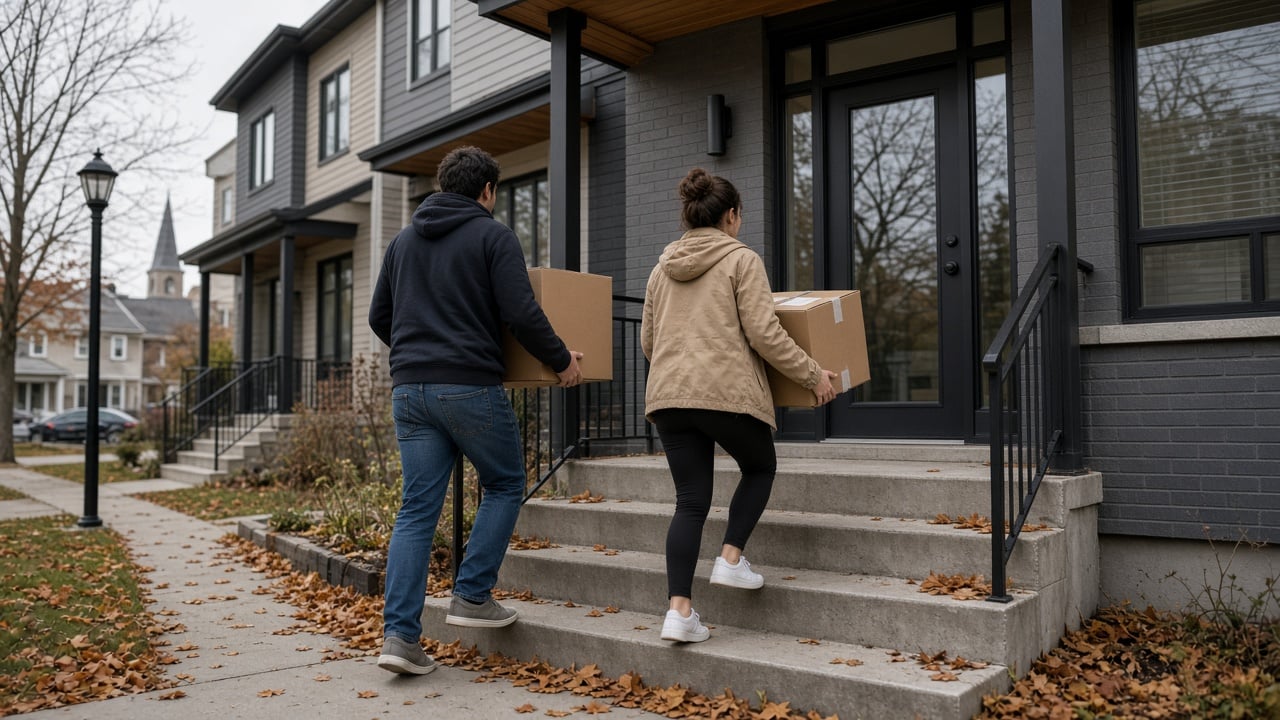
Short answer: Ontario’s land transfer tax refund for first time buyers is worth up to $4,000, and it’s usually claimed by your lawyer when the deal closes. To qualify, you can’t have ever owned a home anywhere in the world, and you have to live in the new home within nine months.
We walk a lot of first time buyers through this in Kemptville and the Ottawa suburbs. The refund is simple once you know the rules, but a few of them surprise people.
Starting to picture your first place? Browse the homes we have for sale right now.


What land transfer tax is
When you buy property in Ontario, the province charges land transfer tax on the purchase price. It’s paid on closing, and your lawyer handles it.
Inside the City of Ottawa and in North Grenville, there’s no separate municipal land transfer tax. The City of Toronto is currently the only Ontario municipality that charges its own municipal land transfer tax, so if you’re buying around here, you’re only dealing with the provincial tax.
How much the refund is worth
For first time buyers, the province refunds up to $4,000 of the tax.
According to the Ontario government, that means no land transfer tax is payable on the first $368,000 of the price of an eligible home. Above that, you pay the tax minus the $4,000 refund.
We don’t quote final tax figures in a blog post because your lawyer will calculate the exact number for your price. The Ontario government’s land transfer tax refund page for first time homebuyers has the official details.
Who qualifies
The province sets these requirements:
- You’re at least 18 years old.
- You’re a Canadian citizen or permanent resident. If you’re not yet, you have 18 months after registration to become one and apply.
- You’ve never owned a home, or an interest in a home, anywhere in the world.
- Your spouse hasn’t owned a home anywhere in the world while they were your spouse.
- You move into the home as your principal residence within nine months of the transfer.
The rules that catch people out
Owning a home before, even overseas
“Anywhere in the world” means exactly that. A condo you owned abroad years ago, or a share of a family home, can disqualify you.
Your spouse’s past ownership
If your spouse owned a home while you were together, neither of you gets the refund. If they owned one before you became spouses, the rule is different, so ask your lawyer.
Buying with someone who isn’t a first time buyer
When two people buy together and only one qualifies, the refund is usually prorated to the first time buyer’s share. Your lawyer can confirm how it applies to your deal.
You can’t qualify twice
Once you’ve received it, or owned a home, you can’t be a first time buyer again for this program. Federal programs like the Home Buyers’ Plan use different definitions, so don’t assume the rules match.
What kinds of homes are eligible
The Land Transfer Tax Act lists eligible homes. It includes detached and semi detached houses, townhouses, condo units, duplexes up to fourplexes, co op shares, and qualifying mobile and manufactured homes.
Resale and new builds both count. If you’re weighing a new build against a resale, our look at in town, new build or rural homes in Kemptville covers the tradeoffs. On a new build, the value used for the tax can include certain builder adjustments, so read your agreement closely.
How the refund is claimed
In most cases your lawyer claims it at registration, so it’s simply deducted from the tax owed on closing day. You never see a cheque.
If it wasn’t claimed then, you can apply directly to the Ministry of Finance within 18 months of registration.
A simple example of how it plays out
Say two first time buyers, both citizens, buy a townhouse in Kemptville together and move in a month after closing. Neither has ever owned property.
Their lawyer confirms eligibility, swears the affidavit on registration, and the refund comes straight off the tax. On the statement of adjustments, they’ll see the tax and the refund side by side.
Now change one detail. One of them inherited a share of a cottage years ago. That share is an interest in a home, so that buyer’s portion likely won’t qualify, and the refund shrinks.
Planning your cash to close
The refund doesn’t hand you money to use for the down payment. It reduces a cost you’d otherwise pay on closing.
When you build your closing budget, list these separately:
- Down payment.
- Land transfer tax, after the refund if you qualify.
- Legal fees and disbursements.
- Title insurance.
- Adjustments for prepaid property tax or utilities.
- Home inspection and any water or septic tests on rural homes.
Having each line separate makes it easier to see what the refund actually saves you, and it keeps a lender’s numbers and your lawyer’s numbers on the same page.
Who the refund doesn’t help much
If you’ve owned before, even briefly, this program isn’t for you. That includes people who owned a home with a former spouse and are now buying alone.
It also won’t do much for buyers whose co purchaser has owned before, since only the eligible share counts. In those cases, we’d look harder at the federal programs and the overall budget instead of counting on this refund.
And remember it only covers the provincial tax. It doesn’t touch legal fees, HST on a new build, or anything else on your closing statement.
What to bring to your lawyer
To claim the refund at registration, your lawyer will ask you to confirm you qualify. Have these ready:
- Government photo ID for each buyer.
- Your answers on if you or your spouse have ever owned a home anywhere in the world.
- Confirmation that you’ll live in the home within nine months of closing.
- Your signed agreement of purchase and sale.
If you’re buying a condo, your lawyer will also review the status certificate. Our guide to the condo status certificate explains what to look for.
If one buyer qualifies and the other doesn’t, tell your lawyer early, since the refund may be reduced based on each person’s share.
Our opinion
Every first time buyer should plan their cash to close with the refund in mind, but not rely on it until the lawyer confirms you qualify. We’ve seen buyers assume they qualified and then learn a parent put them on title years ago.
Bring up any past ownership, even partial, at your first meeting with your lawyer. It costs nothing to ask, and it fits neatly into the conditional period after your offer is accepted.
If you’re early in the process, our mortgage pre approval checklist is a good next read, and our buyer services page explains how we work with first time buyers. You can also find the whole team on our homepage.
FAQ
How much is the Ontario land transfer tax refund for first time buyers?
Up to $4,000. In practice, that means no provincial land transfer tax on the first $368,000 of an eligible home’s price.
Is there a municipal land transfer tax in Ottawa or Kemptville?
No. In Ontario, only Toronto charges a municipal land transfer tax, so buyers in Ottawa and North Grenville pay only the provincial tax.
Do I qualify if I owned a home in another country?
No. The rule covers ownership anywhere in the world, at any time.
What if my spouse owned a home before we met?
The restriction applies to homes your spouse owned while they were your spouse. Ask your lawyer to confirm based on your dates.
How long do I have to move in?
You must occupy the home as your principal residence within nine months of the transfer.
Can a permanent resident get the refund?
Yes. Canadian citizens and permanent residents qualify. Buyers who become one within 18 months of registration can apply then.
How do I claim the refund?
Your lawyer usually claims it when the transfer is registered, so it’s deducted on closing. Otherwise you can apply to the Ministry of Finance within 18 months.
Does the refund apply to new builds?
Yes. Both new and resale eligible homes qualify.
If I buy with a parent, do I still get the full refund?
Usually not. When a co buyer isn’t eligible, the refund is generally limited to the eligible buyer’s share.
Is this the same as the federal first time buyer rules?
No. Federal programs like the Home Buyers’ Plan and the FHSA have their own definitions of a first time buyer.
Sources
- Ontario Ministry of Finance: Land transfer tax refunds for first time homebuyers
- Canada Revenue Agency: The Home Buyers’ Plan
- City of Toronto: Municipal Land Transfer Tax
This article is general information, not legal, tax or financial advice.