


Current Population
Discover
Carleton Place
Carleton Place is the largest town in Lanark County, Ontario, sitting where the Mississippi River widens into a set of falls about 30 to 35 minutes southwest of Ottawa's west end via Highway 7 and Highway 15. With a population of 12,517 as of the 2021 Census, spread across 5,341 private dwellings, it has become a natural next stop for buyers priced out of Ottawa and Kanata, close enough to commute and established enough to have its own hospital, high school, and full retail base.
The town's character is defined by its walkable historic downtown, a legacy of its founding as a nineteenth-century mill town on the Mississippi River, paired with a slower, small-town pace than its size might suggest. Streets tend to be quiet, the riverside boardwalk and trail system see daily use, and community life still runs through local institutions like the Carleton Place Farmers' Market rather than shopping-mall anchors.
Single detached homes make up the largest share of Carleton Place's housing stock, alongside a meaningful supply of townhouses and a smaller stock of condos and apartment-style units. Roughly 70 percent of households in Carleton Place own their home, based on the 2021 Census, one of the highest homeownership rates in the wider Ottawa area and a sign of the town's identity as a family and long-term ownership market rather than a rental-heavy commuter suburb. The median household income was $89,000 in 2020, and the average household size is 2.4 people.
Daily essentials are handled almost entirely within town limits. Grocery stores, pharmacies, restaurants, and cafés are a short trip from most addresses, and schools and daycares are reachable on foot or by a short drive from most residential areas. Carleton Place is also bike-friendly and walkable within the downtown core, while remaining fully car-accessible for residents in the town's newer subdivisions and outlying estate properties.
Living in Carleton Place
Carleton Place grew up around water and industry, and that origin still shapes how the town feels today. Irish settler Edmond Morphy built a dam and grist mill on the Mississippi River around 1819. The settlement that formed around it, first called Morphy's Falls, was renamed Carleton Place in 1830 when the post office was established. By the mid-1800s it had become a serious mill town, with the Findlay's Limited foundry manufacturing stoves that shipped across the country. A scale of Victorian commercial architecture downtown still defines the streetscape today, including the 1897 Town Hall, built in the Richardsonian Romanesque style for a reported $26,000 at the time.
That industrial era core is now the town's main draw. Independent shops, cafés, and restaurants line Bridge Street and Franktown Road. A riverside park and boardwalk system runs along the Mississippi. An annual festival calendar keeps the downtown active in every season: Beaver Fest in summer, the Frost Fest Winter Carnival in the colder months. Carleton Place is also home to one of Canada's oldest canoe clubs, a direct legacy of its river-based origins. Housing stock reflects the same layered history. Century homes and converted mill-adjacent properties sit close to the core. Newer family subdivisions occupy the middle ring. Estate and rural properties spread toward Beckwith and Mississippi Mills at the edges.
Carleton Place was never built to serve Ottawa's overflow. It existed as a self-sufficient mill town for well over a century before Ottawa's growth reached this far west. That history shows up in the density and permanence of the commercial core, in the number of century homes still standing and occupied rather than demolished, and in a town identity that residents describe on its own terms. The town was also the birthplace of Captain Arthur Roy Brown, one of the last Allied airmen credited with engaging German ace Manfred von Richthofen in WWI, a piece of local history commemorated with a mural on the Carleton Place and Beckwith Heritage Museum.
What Carleton Place Is Really Like
Carleton Place operates at a scale that most Ottawa-area towns lose once they cross the twenty thousand resident mark. It is small enough that the mayor answers his own phone and long-time residents recognize each other at the farmers' market, yet large enough to support a hospital, a full grocery and retail base, and its own complete school system from kindergarten through high school. The Mississippi River and its boardwalk system act as the town's social spine, not a scenic backdrop residents drive past on the way somewhere else.
Community life runs through long-standing local institutions rather than shopping-mall anchors. The Carleton Place Farmers' Market, running continuously since 1991, remains a central gathering point for locally grown and crafted goods. The dining scene includes Black Tartan Kitchen, FREKSA Café and Eatery, Sagar Indian Cuisine, St. James Gate Irish Pub, the Waterfront Gastropub, and Braumeister Brewing Company, a mix that gives a town this size an unusually complete food and drink scene for its footprint. Recreation is participatory rather than passive: residents paddle Mississippi Lake, walk the Beckwith Nature Trail, or use the Mississippi River Walk rather than driving to a big-box entertainment complex.
For residents, this translates into a town where neighbours know each other by name and local businesses outnumber chains along the main strip. It is the kind of place where a new resident can be recognized by name at the local café within a few months, and where the social fabric rewards people who plan to stay.
Real Estate in Carleton Place
Homes in Carleton Place sold for an average of $594,440 over the twelve months ending June 2026, up 5.2 percent year over year, with the typical home spending 38 days on market and selling for roughly 98 percent of asking price. That combination, rising prices alongside a healthy but not frantic pace of sales, points to a market that has firmed up steadily rather than spiked. Detached homes averaged $661,475, townhouses $556,738, bungalows $603,906, and condos $319,118, giving buyers a genuinely wide entry range depending on property type.
Current listings tracked in early August span a similar range, from townhomes in the $400,000s to detached homes and estate properties above $850,000, confirming the market has held steady since the June report rather than shifting sharply in either direction. Carleton Place's housing stock spans century homes downtown, mid-2000s subdivisions built during the town's fastest growth period, and rural or estate properties on serviced or well and septic lots outside town limits. These are three genuinely different sub-markets that require different due diligence and appeal to different kinds of buyers.
Because Carleton Place sits at the edge of the wider Ottawa area market and blends into Lanark County's broader inventory, pricing is best evaluated property by property rather than against a single town-wide average. Reach out to Deb Driscoll, Jaime Peca, or Luke Geleynse for current comparables on a specific street, subdivision, or property type before setting expectations on either side of a transaction.
Who Is Moving to Carleton Place
Carleton Place draws a mix of Ottawa commuters trading a longer drive for more space, downsizers from larger Lanark County or Ottawa properties who want walkable amenities without giving up small-town character, and young families drawn by the schools and a lower price point than comparable Ottawa neighbourhoods. The town's average household size is 2.4 people, and its median household income is $89,000, solidly middle-income and consistent with a mix of established local households and commuter families.
Roughly 70 percent of households in Carleton Place own their home, a meaningfully higher ownership rate than the Ottawa average. That level of ownership tends to correlate with residents who are personally invested in the town's upkeep, its school quality, and its long-term planning decisions. The population grew by nearly 18 percent between the 2016 and 2021 censuses, making Carleton Place one of the fastest-growing municipalities in the region.
This growth has been absorbed gradually through new subdivisions rather than sudden, disruptive development, which is part of why longtime residents describe the town as changing without losing its character. Carleton Place has been a natural next stop for buyers priced out of Ottawa's west end or Kanata, close enough to commute and established enough to have its own hospital, high school, and full retail base.
Schools, Services, and Daily Essentials
Carleton Place is served by both public schools under the Upper Canada District School Board, including Arklan Community Public School, Caldwell Street Public School, and Carambeck Public School, and Catholic schools under the Catholic District School Board of Eastern Ontario, including École Catholique J.L. Couroux. Carleton Place High School serves secondary students, and the Mississippi School for the Arts adds a specialized option. Families are not required to leave town at any stage of their children's schooling.
The town has its own hospital, Carleton Place and District Memorial Hospital, along with a full grocery and pharmacy base and a public library, which means most daily essentials are handled locally rather than requiring a drive into Ottawa or a neighbouring town. Recreation is similarly self-contained: the Carleton Place Arena, a splash pad, and an extensive trail and riverside park system connecting to the Mississippi Valley give residents year-round options without needing to travel.
For buyers relocating with children or planning to age in place, this combination of schooling, healthcare, and daily retail within town limits is one of Carleton Place's clearest practical advantages over smaller Lanark County communities that rely more heavily on Ottawa or Perth for these same services.
Getting Around
Carleton Place sits at the junction of Highway 7 and Highway 15, making it a straightforward 30 to 35 minute drive to Kanata or Ottawa's west end under normal traffic conditions, longer during peak commute hours. Recent widening of Highway 7 has cut travel time to downtown Ottawa noticeably compared to a decade ago, part of what has made the town increasingly attractive to commuters who previously would not have considered a Lanark County address.
There is no direct rail or transit link into Ottawa, so most residents commute by car, and carpooling arrangements among town commuters are common enough to be a normal part of local conversation. For anyone weighing a Carleton Place move against a closer-in Ottawa neighbourhood, the honest trade-off is a real but manageable commute in exchange for a meaningfully lower price point and a genuine downtown.
Within town, Carleton Place is walkable and bike-friendly enough that a car is not required for day-to-day errands for residents living in or near the core. Grocery runs, school drop-offs, and downtown dining are realistic on foot or by bike for much of the town's population, a contrast to most of the newer subdivisions further out along the Ottawa commuter corridor.
The Real Costs of Living Here
Beyond purchase price, Carleton Place buyers should budget for the town's own property tax rate, set independently by Carleton Place council, plus Lanark County's upper-tier levy. This two-part structure differs from the single municipal tax bill Ottawa buyers are used to. Homes on municipal water and sewer within town limits avoid well and septic maintenance costs entirely, one of Carleton Place's clearest practical advantages over more rural Lanark townships, where those costs are simply part of homeownership.
Estate lots on the town's outer edge may still be on private well and septic, so it is worth confirming servicing status before making an offer rather than assuming municipal infrastructure extends to every address with a Carleton Place mailing address. A home on private services carries ongoing testing, pumping, and eventual system replacement costs that a fully serviced in-town property does not.
Homeowner's insurance is generally more favourable here than in truly rural Lanark County, given the town's full-time fire department and hydrant coverage, a meaningful cost difference for buyers comparing a Carleton Place property against a similarly priced rural acreage further from town services.
What Makes Carleton Place Different
Compared to nearby Almonte or Perth, Carleton Place is larger, slightly more commuter-oriented, and has a broader retail and services base, including a full-size grocery anchor, a hospital, and big-box options along Highway 7. Buyers choosing between the three towns are often weighing a genuine trade-off between Carleton Place's practical convenience and the more boutique, tourist-oriented character that Almonte and Perth have each cultivated around their own downtown cores.
Compared to Kanata or Barrhaven, Carleton Place trades subdivision density for a genuine downtown, river frontage, and small-town governance. Carleton Place elects its own mayor and council rather than being one ward among dozens in a big-city council, currently Mayor Toby Randell, whose term runs through the next municipal election on October 26, 2026. That independence shows up in how decisions about growth, taxation, and services get made locally, by people who live in the community they are governing.
This governance structure also means Carleton Place's growth has generally been more deliberate than reactive. New subdivisions have been added at a pace the town's schools, hospital, and roads could absorb, which is part of why the town has managed to grow quickly in population terms without the strained infrastructure feel that sometimes accompanies fast-growing Ottawa suburbs.
Is Carleton Place Right for You?
Carleton Place suits buyers who want a genuine downtown and community feel, a reasonable commute into Ottawa's west end, and a choice between in-town serviced homes and rural estate properties at the edges, without needing to compromise on schools, healthcare access, or day-to-day amenities. It is a strong fit for families planning to stay for years rather than buyers looking for a short-term stepping-stone property.
It may be less of a fit for buyers who need a sub-20-minute Ottawa commute, who want to be inside the City of Ottawa's own municipal services and governance structure, or who are specifically looking for the boutique, tourist-town character that Almonte or Perth offer instead. Carleton Place's identity is practical and lived-in rather than curated for visitors, and that distinction matters to how a buyer will experience the town day to day.
If you're weighing Carleton Place against Almonte, Perth, or North Gower, Deb Driscoll, Jaime Peca, and Luke Geleynse can walk you through the trade-offs property by property, based on what you actually need from a commute, a school system, and a community, rather than on general reputation alone.
Free market report
Want the full market report for Carleton Place?
We want to ensure that you have all the information needed to make the best decisions when it comes to your home goals. When you enter your info in the form you will get instant access to the area's latest market report, complete with sales and demographic trends.
Carleton Place
Market Report
By submitting this form, you agree to be contacted by Rogue Real Estate Group Inc., DBA Driscoll Peca Real Estate Team, about your inquiry. SMS consent is optional and controlled above.
News and Advice
Read helpful resources and articles related to the area.
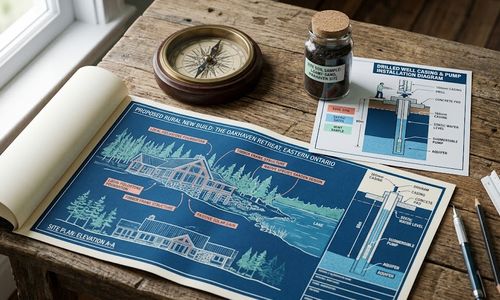
Rural New Builds: Understanding True Rural Living in …
Building a new home in rural Eastern Ontario, from Kemptville to Frontenac County, means planning for…
What's Beneath the Surface? Hidden Aspects of Rural …
When considering a rural property in Eastern Ontario, it’s easy to be charmed by the visible…

Understanding Your Commercial Rent Roll in Eastern Ontario
For anyone considering commercial real estate in vibrant Eastern Ontario, understanding a rent roll is paramount.…
Ready to take
The next step?
Not sure if now's the right time to buy or sell? Need a reliable contractor? We would love to get to know more about you and your needs! Feel free to use any of the options here to get in contact with us!