The Real Cost of Owning Rural Property in Eastern Ontario: What the Tax Bill Doesn’t Show You

The first time most buyers browse listings in Kemptville, Merrickville or Perth after spending time in Ottawa’s market, the reaction is immediate. The acreage. The custom builds. The property tax rates that look almost too reasonable on paper. That reaction is justified. Moving into Eastern Ontario’s commuter-rural corridor genuinely is one of the most effective ways to upgrade both lifestyle and square footage relative to price.
But the purchase price is only one part of the equation. When you move from a suburban semi-detached in Kanata to five acres in North Gower, the financial structure of homeownership changes fundamentally. In a city condo, your variable costs are consolidated into a monthly fee managed by someone else. On a rural property, those costs are still present. They just don’t have a property manager. You are the property manager.
Strategic buyers understand this before they search. They evaluate not just what it costs to acquire a property, but what it costs to operate it well over a decade of ownership. That framework, the true cost of ownership, is what separates buyers who thrive in Eastern Ontario’s rural market from those who are surprised by it.


Two women stand on an elevated vantage point overlooking a snow-covered small town in Eastern Ontario, stone buildings and a church steeple visible below.

Why the Purchase Price Is Only the Beginning

The mortgage payment is the most visible number in a rural purchase, but it is rarely the most consequential one over time. In urban and suburban environments, variable ownership costs are largely invisible, absorbed into condo fees, municipal utilities and service contracts managed at scale. In rural Eastern Ontario, those same costs become direct line items that the homeowner manages, funds and plans for.

This is not a reason to hesitate. It is a reason to be precise. Buyers who build a complete ownership cost picture before committing consistently make better decisions about which property to purchase, which community to prioritize and how to structure their finances for the first few years of rural ownership.

The goal is not to lower expectations. It is to ensure that the lifestyle and financial case for moving to Eastern Ontario is built on accurate numbers rather than an incomplete comparison. And in the vast majority of cases, those accurate numbers still tell a compelling story in favour of the move.

A woman with dark straight hair crouches on a gravel rural driveway beside a well access cover, green farmland stretching behind her in the golden afternoon light.

The Infrastructure Costs Nobody Calculates: Well, Septic and Beyond

In urban environments, water arrives and waste disappears through systems that most residents never think about. On a rural property near Metcalfe, Winchester or North Gower, the homeowner owns that infrastructure directly, and maintaining it is both a responsibility and a cost.

A well-functioning septic system requires pumping every three to five years. In Eastern Ontario, residential septic pumping typically runs between CAD $250 and $450 depending on tank size, distance and urgency. The more significant cost risk lies not in routine pumping but in the leaching bed. A compromised leaching bed is a five-figure repair that a visual inspection will not reveal. A professional septic assessment during due diligence is not optional. It is the single most important inspection a rural buyer can commission.

Well systems introduce a parallel category of ongoing cost. Water treatment, including UV filtration and water softeners to address the iron levels common across Eastern Ontario’s geology, represents both an upfront equipment investment and ongoing operational costs. A basic water quality test runs CAD $120 to $250. A full well inspection package typically falls between $300 and $600. Annual water quality testing is a standard maintenance item. Recovery rate testing should be part of any pre-purchase well inspection, not just basic quality analysis.

These are not reasons to avoid rural property. They are the markers of a well-understood investment. Buyers who know their infrastructure going in are the ones who enjoy it most for the longest time.

Two women stand at a frost-covered wooden fence beside a chestnut horse on a snowy Eastern Ontario morning, frosted pine trees stretching across the background.

Heating, Hydro and Rural Energy Reality

Heating a 3,000 square foot property in Winchester or a heritage farmhouse near Perth operates on a different scale than heating a townhouse in Barrhaven. Many rural properties in Eastern Ontario rely on propane rather than natural gas, efficient but subject to market fluctuation. Current pricing in the region typically ranges between CAD $0.75 and $1.10 per litre depending on plan type, delivery schedule and location.

Electricity costs add another layer. Most rural Eastern Ontario properties are served by Hydro One, with blended residential rates currently running approximately CAD $0.13 to $0.19 per kWh under Time-of-Use or Tiered pricing. Rural delivery charges can add meaningfully to the base rate.

The most useful due diligence step here is simple: request the last two years of heating bills before closing. A property that consumed $4,000 in annual heating costs tells you something concrete about insulation quality, window performance and mechanical efficiency that no listing description will.

Modern heat pumps are increasingly changing the energy economics of rural ownership in Eastern Ontario, offering meaningful efficiency gains particularly in shoulder seasons. For buyers considering properties with aging heating systems, understanding the upgrade path and associated costs is a legitimate part of the ownership cost calculation. And increasingly, those upgrades are paying for themselves faster than ever as energy technology improves across the region.

View from the back seat of a car as two women drive along a snow-covered rural highway in Eastern Ontario, bare trees lining both sides of the road.

Distance as a Hidden Cost: Services, Commute and Time

Distance is the ownership cost that resists spreadsheet quantification but shapes daily life more consistently than any infrastructure line item. When you live in Almonte, Perth or Brockville, you are making a deliberate trade: proximity for space, density for quiet. That trade has real financial dimensions.

Vehicle wear and fuel costs increase meaningfully with rural living. A trip to the hardware store is a planned event rather than a five-minute errand. Families with children in organized activities accumulate significant additional mileage. Buyers relocating from Ottawa should build a realistic estimate of increased transportation costs into their true ownership cost model. Most find that even with that adjustment, the value equation still lands firmly in favour of Eastern Ontario. The space, the quiet and the quality of life simply don’t have an urban equivalent at any comparable price point.

Satellite internet services like Starlink have become the go-to solution for many rural Eastern Ontario households where fibre is unavailable. Hardware runs approximately CAD $599 with monthly plans between $140 and $160. Coverage and reliability have improved considerably across the region, but confirming actual service availability at the specific property address before purchasing remains essential for households with remote work requirements.

Related: What Should Buyers Know Before Purchasing Rural Property in Eastern Ontario?

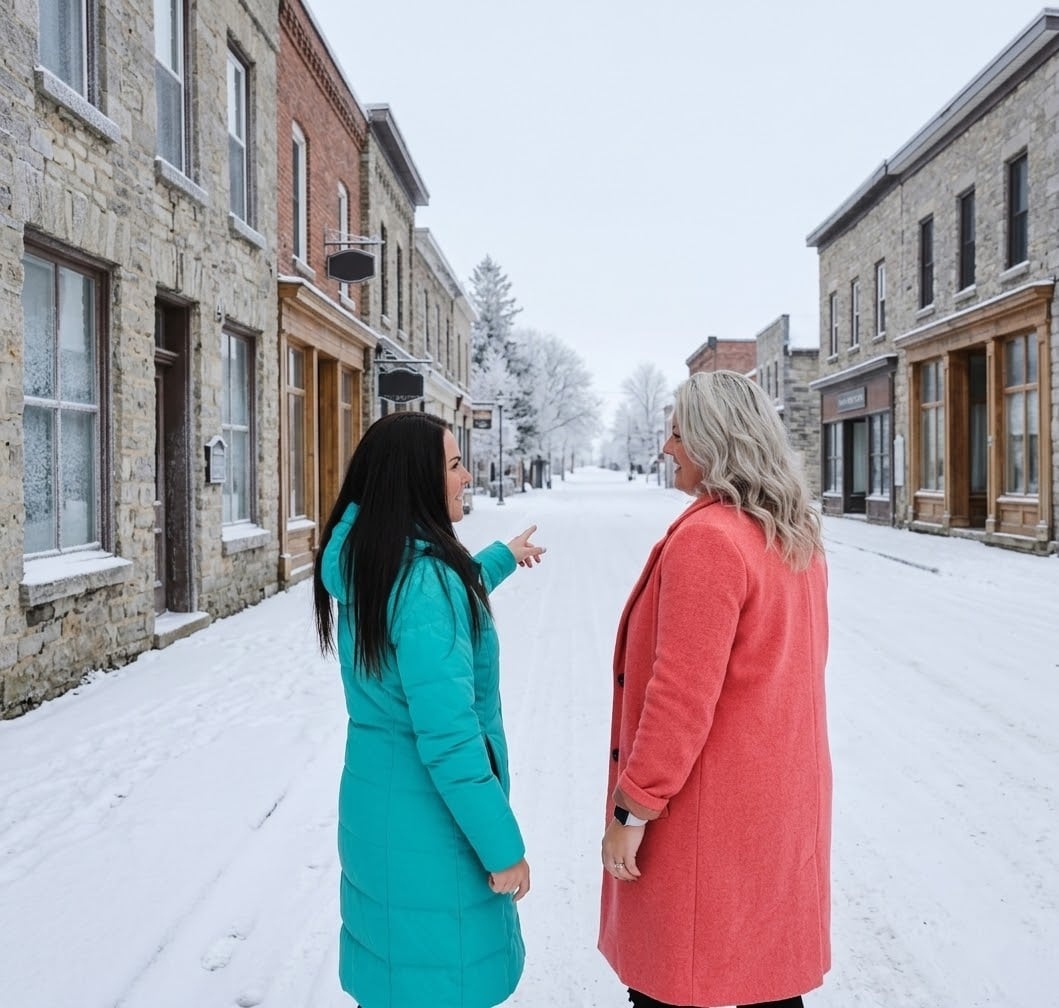
Two women stand on a snow-covered heritage main street in Eastern Ontario, stone and brick buildings lining both sides, one woman in a teal coat gesturing toward the town as they talk.

How Total Ownership Cost Compares Across Eastern Ontario Communities

Not all rural value propositions are equivalent across the region. North Grenville, encompassing Kemptville, has invested consistently in municipal services and infrastructure, which contributes to slightly higher tax rates but meaningfully lower private costs: faster road clearing, shorter service distances and a growing commercial base that reduces the operational friction of rural life.

More remote properties in communities like North Augusta or rural Lanark County may carry lower tax obligations but require greater investment in personal equipment and self-sufficiency infrastructure, including backup generators, high-capacity snowblowers and extended fuel storage. These are not deterrents. They are variables that belong in the ownership cost model before the purchase, not after.

Comparing communities in Eastern Ontario requires looking beyond the tax rate to the full operational profile of rural life in each location. That analysis consistently reveals that the region’s best communities offer not just livability but genuine long-term value. Local expertise is what makes the difference between a good purchase and a great one.

Related: How Do Property Taxes Compare Across Communities in Eastern Ontario?

Two women stand in the open doorway of a stone barn looking out over a golden rural property in Eastern Ontario, a long gravel lane cutting through the fields ahead.

Building Your True Cost Framework Before You Search

The buyers who navigate Eastern Ontario’s rural market most effectively arrive with a framework, not just a wishlist. Before evaluating any specific property, build your true cost baseline across four categories:

Private infrastructure fund: Budget conservatively $1,000 to $1,500 annually for well, septic and mechanical system maintenance. In years with no significant repairs, this becomes an equity-building reserve. In years with a system event, it ensures you are not making reactive financial decisions.

Transportation budget: Increase your monthly fuel and vehicle maintenance estimate by 15 to 20 percent relative to your current suburban baseline. This accounts for the genuine increase in daily travel distance that rural living introduces.

Energy baseline: Request two years of utility history on any serious candidate property. Understand the heating system type, age and efficiency before closing.

Land and property operations: Whether a ride-on mower, a snowblower, professional clearing contracts or seasonal maintenance services, rural land requires tools or budgets that urban ownership does not.

When you evaluate a property through this framework, the purchase price becomes one input in a more complete picture. And in the vast majority of cases, even with accurate operational costs included, the value of land, space and quality of life across Eastern Ontario’s commuter-rural corridor remains one of the most compelling ownership propositions in the region. The combination of community character, land availability and long-term appreciation fundamentals is simply not replicated elsewhere at comparable price points.

The buyers who build the most accurate picture of rural ownership costs before they search are consistently the ones who act with the most confidence when the right property appears. If you are beginning to map the true cost of moving to Eastern Ontario, a conversation with the Driscoll-Peca Team can help you build that framework with numbers grounded in real regional experience.

FAQ

Is a septic inspection necessary if the owner says the system was recently pumped?

Yes, without exception. Pumping empties the tank but provides no information about the structural integrity of the tank itself or the condition of the leaching bed. A professional septic inspection during due diligence is one of the highest-return investments a rural buyer can make.

Does rural internet cost more than city service in Eastern Ontario?

Coverage and pricing have improved significantly with expanded rural broadband programs and Starlink availability. Costs may be slightly higher than urban promotional rates, but reliability has improved considerably. Always verify service availability at the specific property address before purchasing.

How much should I budget annually for well and septic maintenance?

A conservative baseline of $1,000 to $1,500 annually covers routine maintenance across most rural properties in good operational condition. Properties with older systems or known service histories may warrant a higher reserve in the first years of ownership.

Are rural properties in Eastern Ontario still good value after accounting for all ownership costs?

In the vast majority of cases, yes. The combination of land value, living space, lifestyle quality and long-term appreciation fundamentals in Eastern Ontario’s commuter-rural corridor consistently delivers strong total value. Even when full operational costs are accurately modeled, the case for Eastern Ontario rural property remains one of the most compelling within reach of a major Canadian city.

Check out this article next

How Do Property Taxes Compare Across Communities in Eastern Ontario?

How Do Property Taxes Compare Across Communities in Eastern Ontario?

Property taxes across Eastern Ontario communities tell a more nuanced story than a single rate comparison. The Driscoll-Peca Team explains how assessment values, municipal investment…

Read Article